


Horry.EXE Digital Music Battle
4.5496.00 Reviews
App Specs
- Version
- 2.9
- Updated On
- License
- Free
- Downloads
- 1,000,000+
- Developer
- Lan Pham
- Categories
- Music
- Platform
- Android
Screenshots
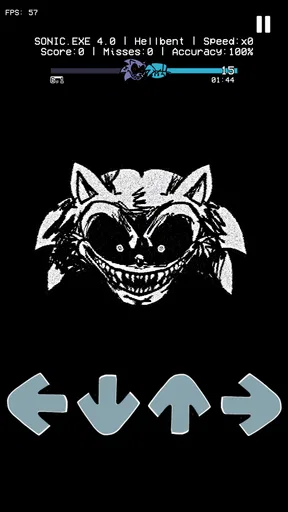
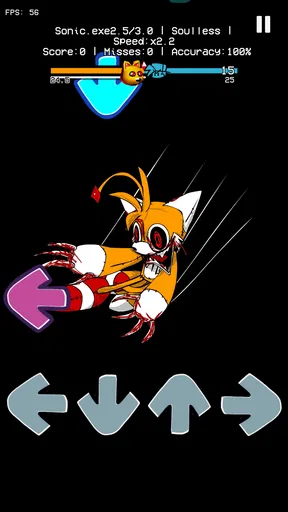
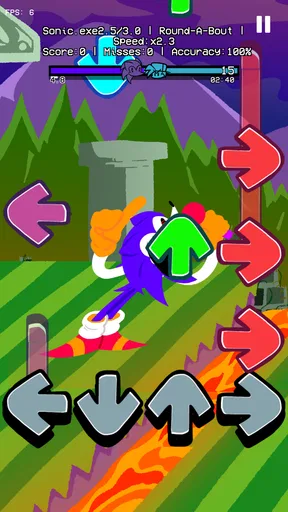
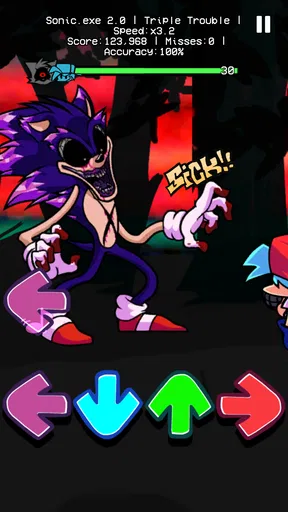
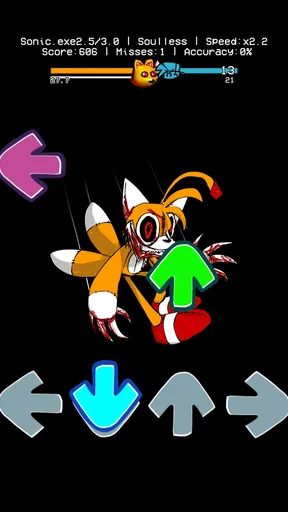
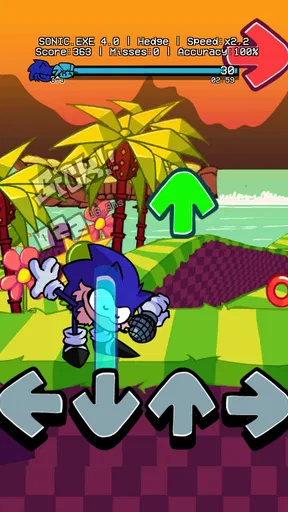
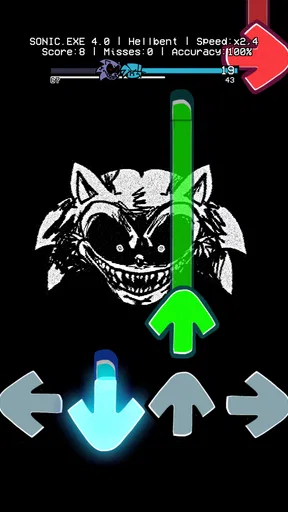
 Analysis by AppCompare
I approached Horry.EXE Digital Music Battle expecting a quick rhythm game with a spooky edge, and that is exactly the kind of experience it offers: a music-focused battle built around timing, pressure, and the goal of helping a girlfriend in danger. The premise is simple enough to understand immediately, but the appeal comes from trying to stay accurate while the songs become harder to follow. I found it easy to begin, yet less forgiving once I stopped treating each sequence as something to tap casually.
This is a free game from Lan Pham, listed for Teen players and available on Android devices running version 7.0 or later. Its store identity is brief, with “Horry.EXE” as the short description, so a first-time player should not expect a long explanation before starting. The game works better when approached as a focused music challenge rather than as a story-heavy adventure. You are there to react to the rhythm, learn the visual pattern, and improve through repeated attempts.
What the first session feels like
The opening minutes are best understood as a test of coordination. I recommend playing with the phone held comfortably and keeping the display free from distractions, because rhythm games punish even small interruptions. The central task is not complicated: follow the musical cues and respond at the right moment. What makes it engaging is the narrow gap between an almost-correct input and a clean one.
The Friday-night battle theme gives the game a playful but slightly tense personality. It is not presented like a traditional music player, and it is not designed for passive listening. The songs are the framework for competition, while the danger surrounding the girlfriend gives each round a reason to continue. That combination makes the experience more memorable than a collection of disconnected tapping exercises.
One useful expectation to set is that the game rewards concentration more than speed. New players often rush because the screen appears busy, then lose control after missing one cue. I had better results when I watched the incoming pattern for a moment, identified its direction, and only then committed to a steady rhythm. That small change turns the first successful round from luck into a repeatable skill.
The game has attracted a broad audience, with more than a million installs and an average score of 4.4 from roughly twenty-five thousand ratings. Those figures suggest that its basic format is easy for many people to pick up, but they should not be mistaken for a promise that every player will enjoy the same difficulty. Anyone who dislikes repeated attempts, musical timing, or visual pressure may find the experience tiring rather than relaxing.
Getting ready without overthinking it
Because the game is free, there is no purchase decision blocking the first session. Install it, open it, and give yourself a few minutes without trying to judge the entire experience from the first miss. My practical advice is to begin when you can keep your attention on the screen. A rhythm battle is a poor fit for a crowded commute if you are constantly looking away, even though short sessions can work well when your surroundings are calm.
Worth Reading Before You Choose

EA SPORTS FC Mobile 26 Is a Bigger Football Game, but It Takes Time

Flipboard Shows What News Apps Must Do Beyond the Feed

Switching to Android Auto Means Rethinking Your Driving Routine

Google Calendar Makes a Crowded Week Easier to Manage

Ludo King Makes the Most of the Minutes Between Plans

Baby Panda World Brings Quick Play to Modern Phones, but Its Game Library Feels Busy
Before starting a serious attempt, check how you naturally hold the device. Some players prefer using both thumbs so each side of the screen feels equally accessible; others feel more comfortable with one hand. I found that the best choice depends less on speed than on keeping the phone stable. A loose grip creates accidental movement, and accidental movement makes visual cues harder to track.
Sound also matters to the experience. Playing with audio makes it easier to connect the visual prompts to the beat, while playing silently turns the task into a more demanding visual reaction test. If you need to keep the volume low, focus on the regularity of the cues instead of trying to guess the entire song. The game remains playable as a visual challenge, but the music is part of what gives the battles their identity.
The current version is 2.9, and the game supports Android 7.0 and newer. For someone using an older device, that requirement is worth checking before planning a session. On a compatible phone, the important preparation is not a complicated account setup or a lengthy tutorial; it is simply creating a stable playing position and giving your eyes time to understand the cue flow.
How to reach a first meaningful success
My definition of a first success here is not merely opening a level. It is completing a musical exchange while staying calm after an imperfect input. To reach that point, I would start by watching the first sequence rather than trying to prove anything immediately. Notice whether the prompts arrive in a repeating pattern, then respond with deliberate movements instead of frantic taps.
When a mistake happens, avoid changing your entire approach at once. If your timing is late, begin responding slightly earlier on the next attempt. If you are confusing directions, keep your eyes on the incoming cue instead of the character or surrounding action. This sounds obvious, but it is one of the most useful habits in the game: isolate the problem rather than treating every miss as evidence that the whole round is impossible.
A realistic everyday scenario would be a ten-minute break after work or school. I would play one attempt to learn the sequence, pause briefly, then try again with a single goal such as keeping the opening section under control. That is more productive than repeating the full battle immediately with no adjustment. The short-session format also prevents frustration from turning into careless inputs.
Another practical tip is to use the first attempt as reconnaissance. Do not focus only on whether you win. Pay attention to where the pattern changes, when the pace feels less predictable, and which side of the screen causes hesitation. On the second attempt, you can prepare for those moments instead of reacting to them as surprises. This makes the game feel more like learning a song than gambling on reflexes.
For younger players within the Teen rating, I would still recommend that an adult look at the tone before handing over the phone, especially if the child is sensitive to danger-themed stories or tense character situations. The rating is part of the game’s identity, and the rescue premise is not presented as a completely neutral music exercise. Players who want only cheerful, low-pressure songs may prefer a gentler alternative.
Where new players commonly get confused
The biggest source of confusion is assuming that visual activity equals the correct moment to act. In a rhythm battle, the prompt’s position and timing matter more than whatever else is happening on screen. I initially found it tempting to follow the character animation, but that divided my attention. Once I treated the incoming musical cues as the only urgent information, the controls felt much clearer.
Another mistake is tapping faster after a miss. That reaction is understandable, yet it usually creates a second error because the player is responding emotionally rather than musically. A missed cue does not always mean the next cue should be rushed. Keep the beat in mind, reset your posture, and wait for the next readable signal. The game becomes less intimidating when one mistake is treated as a single event instead of a collapse.
Players may also wonder whether the story or the music is the main attraction. In my experience, the music battle comes first and the rescue setup gives it context. If you need a deep narrative with extended dialogue, character development, and exploration, this will feel lightweight. If you want a compact challenge where the story explains why the confrontation matters, the balance is more suitable.
The short description, “Horry.EXE,” also gives little guidance about the actual play style. That can make the game seem more mysterious than it needs to be. I would describe it plainly as a rhythm-based battle with a tense rescue premise. Thinking of it that way helps set the right expectations before installation and avoids expecting a conventional horror game or a full music-production tool.
There is also a difference between playing for completion and playing for improvement. Someone who only wants to see what happens may become impatient with repeated musical sections. I enjoyed it more when I treated each attempt as practice. The trade-off is clear: the game can provide satisfying progress without requiring a long session, but that progress depends on accepting repetition as part of the design.
How it compares with familiar music games
Compared with a standard music player, this game is interactive rather than relaxing. You cannot simply choose a track and let it run in the background; your attention affects the outcome. Compared with a broad rhythm-game collection, it feels more focused because the rescue scenario gives the battles a specific mood. That focus is a strength for players who like a clear theme, but it may feel limiting to anyone seeking many unrelated musical styles or a highly customizable playlist.
It also differs from casual tap games that let players succeed through loose timing. Here, the satisfaction comes from becoming more accurate. If you want something to play with one hand while watching television, a simpler casual title would probably be a better match. If you want a game that asks you to listen, watch, and respond together, this one has a stronger reason to keep your attention on the screen.
The game is not the right choice for every music fan. People looking for instrument simulation, songwriting tools, karaoke, or music discovery should choose an app built for those purposes. This is a game first. Its songs support the battle, and its story supports the mood; neither should be confused with the features of a dedicated music application.
For fans of rhythm battles, however, the combination is appealing. The danger premise gives a missed sequence more emotional weight than an abstract score alone, while the free entry point makes it easy to test without committing money. My main reservation is that the concise presentation may leave some players wanting clearer onboarding. The game is approachable once you understand the pattern, but it does not replace attentive play with extensive explanation.
Small habits that make later attempts better
I found three habits especially useful. First, keep your eyes slightly ahead of the cue you are handling. Looking only at the current input leaves little time to prepare for the next one. Second, keep your hands relaxed. Tension makes every movement larger and less consistent, particularly during a fast passage. Third, stop after a frustrating series of attempts and return later. Rhythm accuracy declines quickly when concentration turns into irritation.
A fourth habit is to change only one variable between attempts. If you alter your grip, volume, timing, and attention all at once, you will not know what helped. Try a different hand position first, then a calmer pace, then a more deliberate focus on the incoming pattern. This simple method turns trial and error into useful practice and is more effective than repeatedly restarting without reflection.
If you plan to play during short breaks, set a personal stopping point before beginning. The game’s challenge can encourage “one more try,” especially after a near-success. That can be motivating, but it can also make a brief session longer than intended. I like using one attempt to learn and one attempt to apply the lesson, then deciding whether I still have the attention needed for another round.
For a first-time user, the most reassuring thing is that early mistakes are informative. A failed sequence shows where your reading or timing breaks down. Instead of asking whether you are naturally good at rhythm games, ask which specific cue caused the problem. That question leads to improvement, and it keeps the rescue premise from becoming an unnecessary source of pressure.
Who should install it and who should skip it
I would recommend this game to players who enjoy compact music challenges, themed battles, and the satisfaction of improving through repetition. It is particularly suitable for someone who wants a free Android game that can fill a short break but still demands genuine concentration. The Teen rating and danger-focused setup make it more appropriate for players comfortable with a darker, more urgent tone than a purely cheerful music title.
I would skip it if your ideal music game is passive, highly customizable, or centered on real-world songs and instruments. I would also look elsewhere if missed inputs quickly spoil your mood. The game’s strongest quality is its focused challenge, and that same focus becomes a weakness when you want a broad selection of activities or a forgiving experience.
Lan Pham has kept the concept direct: music is the action, and the rescue situation gives the action a purpose. With more than four hundred reviews alongside its wider rating activity, the game has enough player attention to show that the format connects with a substantial audience. Still, popularity does not remove the need to match the game to your habits. Your enjoyment will depend on whether you like learning patterns and trying again.
My recommendation after playing
Horry.EXE Digital Music Battle works best when you give it focused attention, use the first attempt to learn rather than win, and treat each later round as a small timing exercise. I liked that the premise gives the music battles a recognizable identity, and I appreciated being able to approach it in short sessions. The free price makes experimentation easy, while the Android compatibility keeps the entry requirements straightforward for supported devices.
My honest warning is that the compact presentation may not satisfy players searching for a large story or a deep music library. The game also asks for patience: rushing, watching the wrong part of the screen, or continuing while frustrated can make the challenge feel harsher than it really is. Those are not reasons to reject it, but they are important to understand before installing.
If you enjoy rhythm games and want a themed battle rather than a passive music app, I think it is worth trying. Start with the simplest goal possible: understand the cue flow and complete one section with control. Once that first meaningful success arrives, the rescue premise becomes more engaging because you are no longer merely surviving the pattern; you are actively learning how to beat it.
My final view: this is a focused, free music game for players who like tense timing challenges and do not mind repeating a sequence to improve. It is not a universal music solution, but for the right player, its direct battles and danger-themed setting make a short session feel purposeful.
Pros
- Distinctive glitch-horror presentation gives battles a memorable identity.
- Short sessions make it easy to play during quick breaks.
- Music-driven challenges reward timing and attentive listening.
- Unusual character designs appeal to fans of experimental indie games.
- The concept offers a fresh alternative to conventional rhythm games.
Cons
- The unsettling imagery may not suit younger or sensitive players.
- Difficulty can feel abrupt when songs introduce faster patterns.
- Limited mainstream appeal may reduce replay value for some players.
- Audio quality and timing can vary depending on the device used.
- The game may feel confusing until its mechanics are fully understood.
FAQs for Horry.EXE Digital Music Battle
What is Horry.EXE Digital Music Battle?
Horry.EXE Digital Music Battle is a rhythm-focused music game centered on timed battles, animated characters, and electronic or digital-style tracks. Players generally progress by matching notes or completing musical patterns while facing increasingly difficult opponents. Its appeal comes from combining arcade rhythm mechanics with a distinctive visual theme, making it suitable for players who enjoy music challenges, quick reactions, and short sessions rather than traditional story-heavy gameplay.
How is the gameplay in Horry.EXE Digital Music Battle?
The gameplay is based on rhythm and timing. Notes, prompts, or other visual cues appear in sync with the music, and you must tap, press, or follow them accurately to maintain your score and defeat the opposing performer. Early stages are relatively accessible, but later songs can demand faster reactions and greater concentration. Practice is important because learning each track’s rhythm often makes a noticeable difference.
Is Horry.EXE Digital Music Battle suitable for beginners?
Yes, beginners can usually enjoy Horry.EXE Digital Music Battle, especially if they already like casual rhythm games. The basic concept is easy to understand, and starting with simpler songs gives you time to become familiar with the controls and note patterns. However, players who are not accustomed to fast-paced tapping may need several attempts on harder stages. Using headphones and adjusting the difficulty, when available, can make the learning process more comfortable.
Does Horry.EXE Digital Music Battle require an internet connection?
The connection requirements may depend on the version and the features included by the developer. Core gameplay may be available offline after the necessary files have been installed, but advertisements, updates, online rankings, cloud-related functions, or additional content can require internet access. Before downloading, check the store listing for the current requirements. It is also wise to launch the game once while connected so that all essential resources can finish loading.
Are there advertisements or in-app purchases in Horry.EXE Digital Music Battle?
The presence of advertisements or optional purchases can vary between releases, platforms, and regional versions of Horry.EXE Digital Music Battle. Some versions may show ads between attempts or offer optional content, while others may provide a more straightforward free experience. Review the official Google Play or App Store listing before installing, particularly if the game will be used by children. Also check requested permissions and purchase settings to avoid unexpected interruptions or charges.


